All-Russian Film Union
A Gentleman in MoscowThe All-Russian Film Union is presented as a professional body within the Soviet film world, most concretely through the career of Anna Urbanova: membership in 1921 gave her access to the Union’s dedicated stores. The novel does not describe the organization’s internal structure or wider operations. Instead, this specific benefit shows how formal recognition could translate a successful screen career into material privilege, even as the political climate surrounding cinema remained changeable.
Membership and Early Recognition
Anna’s membership followed a rapid ascent. Discovered by Ivan Rosotsky in a regional theater outside Odessa in 1919, she became the leading lady in his next two films. Their historical romances celebrated workers’ moral purity and contrasted it with the corruption of the privileged; both proved popular, and both pleased the Politburo, which welcomed diversions suited to the aftermath of the war years.
The Union’s place in Anna’s rise is precise rather than expansive: in 1921 she received membership and access to its dedicated stores. The novel sets that institutional benefit beside other signs of her celebrity. In 1922 she was given use of a dacha near Peterhof; in 1923 she received a former fur merchant’s mansion furnished with gilded chairs, painted armoires, and a Louis Quatorze dresser. At the soirées she held there, artists and senior Party members gathered while she descended the staircase in a long silk dress. Membership thus belongs to a broader sequence in which screen success became social standing and access to privileged spaces.
Cinema and Political Favor
The film world that made Anna prominent was not simply rewarded for popularity. Rosotsky’s films offered stories whose moral direction suited the authorities’ appetite for reassuring entertainment, but the narrative stresses that art could not be made politically unambiguous. A gesture or inflection might unsettle an intended message; official preferences could therefore change even when a work appeared carefully aligned with them.
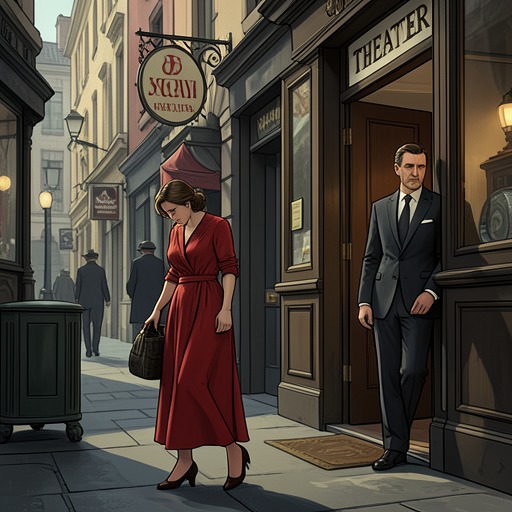
That instability becomes visible at the Moscow premiere of Rosotsky’s fourth film with Anna. Joseph Stalin, who had previously been known for his enthusiasm, did not respond to the screen as warmly as before. The audience sensed the shift through the theater itself: those in the orchestra restrained their enthusiasm, dampening the response in the mezzanine and then the balcony. The episode does not establish that the All-Russian Film Union caused or directed any political decision. It instead distinguishes professional recognition from political security: Anna’s membership and access to stores marked her success, while the reception of a later film remained vulnerable to the changing signals of state approval.
Film Beyond the Union
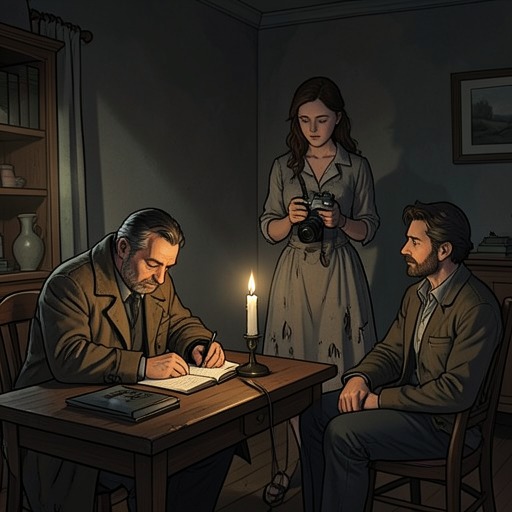
Elsewhere, the novel gives cinema a life beyond professional advancement and official favor. In the Yellow Room, Osip Ivanovich Glebnikov and Count Alexander Ilyich Rostov turn to American films as a sustained subject of study after the de Tocqueville affair. Osip initially reads popular genres as instruments that soothe workers with fantasies or divert their fears, but his judgments shift when he encounters film noir. Films such as This Gun for Hire, Shadow of a Doubt, and Double Indemnity seem to him to expose the cruelty and corruption of capitalism rather than conceal them.
His close attention to The Maltese Falcon makes the viewing itself consequential. While the film is playing, Count Alexander Ilyich Rostov asks whether Russians are especially inclined to destroy what they have created. Osip, absorbed in the scene, freezes the projection at the moment Sam Spade reaches for his penknife and protests that the Count has turned away from the action unfolding on screen. The interruption reveals two competing ways of watching: the Count draws a broad question about Russian conduct from the movie, while Osip insists on the immediate particulars of the scene. This later film culture is not attributed to the Union, but it enlarges the context of the institution’s brief appearance: cinema in the novel is both a profession shaped by material and political conditions and a medium through which characters test ideas.
Institutional Significance
The Union’s documented significance is modest but revealing. Its membership conferred a practical benefit, and Anna’s case places that benefit within a career marked by popular success, official attention, and conspicuous privilege. The novel does not supply enough detail to treat the Union as the author of Soviet film policy or as the sole gatekeeper of artistic work. Instead, it sets the organization alongside a wider system in which professional recognition could coexist with political dependence—and in which a change in official response could alter the meaning of apparent success.